
When Do You Stop Paying? Rethinking the Cost of Solar & Battery Systems in Mackay & Townsville
For many homeowners in Mackay and Townsville, one of the biggest barriers to installing solar or a battery is the initial cost.
That is understandable. A quality solar and battery system is an investment.
But there is another way to look at it.
You are going to spend money on electricity either way. The question is: when do you stop paying?
Without solar, you continue purchasing electricity from the grid month after month. With a properly designed solar system, you have the opportunity to redirect some of that ongoing household expense towards an energy system installed on your own property.
Solar will not eliminate every power bill for every household. Your results will depend on your electricity usage, system size, tariffs, roof, location and when you use your power.
But it can change how you think about the long-term cost of electricity.
You Are Already Paying for Power
Every household in Mackay and Townsville needs electricity.
Without solar, that generally means continuing to purchase electricity from the grid.
The bill gets paid, you use more electricity, and another bill arrives.
Solar gives you another option.
During daylight hours, your solar system generates electricity that can be used directly within your home. Every unit of solar energy you use yourself is electricity you do not need to purchase from the grid at that time.
The Australian Government explains that households generally get the greatest financial benefit from rooftop solar when they use more of the electricity their system generates themselves.
That is why the upfront cost of solar should not be considered in isolation.
A better question is:
How much will I spend on electricity over the coming years if I do nothing?
Redirecting Money You Are Already Spending
Think about what your household currently spends on electricity each year.
Then consider that cost over five, ten or fifteen years.
You are going to spend money powering your home regardless.
The difference is where that money goes.
Without solar, your electricity payments continue indefinitely.
With solar, you are putting money towards a system designed to generate electricity for your property for years to come.
That is the thinking behind our question:
When Do You Stop Paying?
An electricity bill does not have a natural end date.
A solar system does have a purchase price or finance period.
Once the system has been paid for, it can continue generating electricity for your home, subject to its performance, condition, maintenance and lifespan.
This does not mean solar is free or that every system will pay itself off within the same timeframe.
It means homeowners should consider the long-term cost of continuing to purchase electricity alongside the cost of investing in solar.
How Can a Battery Change the Equation?
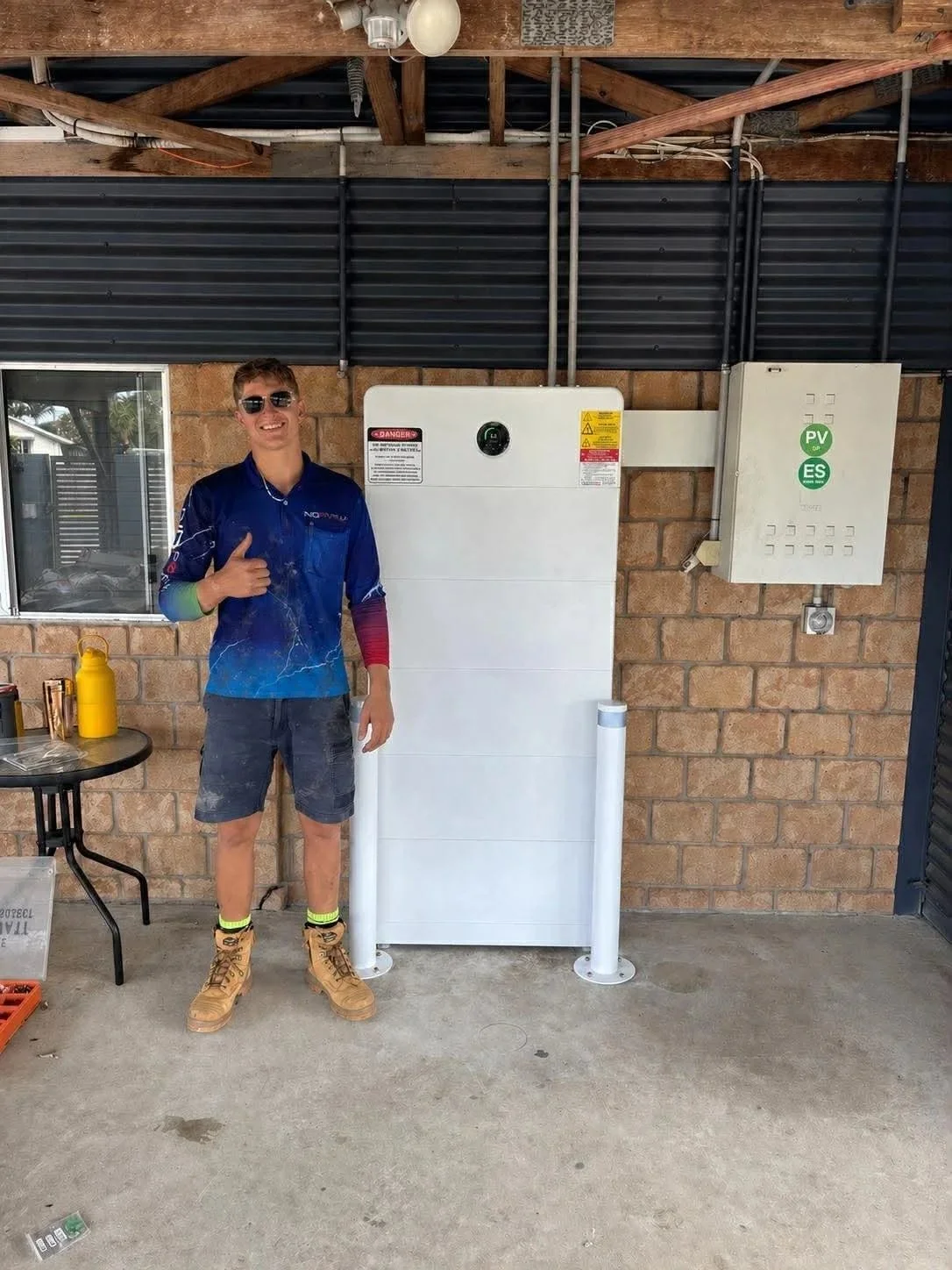
A solar battery allows you to store some of the electricity your solar panels generate during the day.
You can then use that stored energy later, including during periods when your panels are producing less or no electricity.
For households in Mackay and Townsville that use significant amounts of electricity in the afternoon and evening, battery storage may help increase the amount of solar energy used within the home.
A battery may be particularly useful for households wanting to:
Use more of their own solar energy
Reduce reliance on grid electricity
Store excess daytime solar generation for later
Better manage evening electricity use
Prepare for changing household energy needs
However, batteries are not automatically the right financial choice for every property.
The Australian Government advises that while batteries can increase solar self-consumption and reduce electricity purchased from the grid, the financial benefit depends on the household's individual circumstances.
Your electricity usage, existing solar system and future energy requirements should therefore be assessed before deciding whether battery storage makes sense.
What About the Upfront Cost?
This is where many homeowners stop considering solar.
They see the total system price and compare it with spending nothing today.
But you are not really comparing solar with spending nothing.
You are comparing it with the electricity costs your household will continue paying.
NQ Power UP Electrical offers access to a low-interest green loan option for eligible customers, which may allow homeowners to finance a solar or battery system rather than paying the entire amount upfront.
This provides another way to approach the investment.
Instead of continuing to direct all of your energy spending towards electricity bills, you may be able to redirect part of your household budget towards paying off your own solar system.
Finance does not make solar free. You are still committing to repayments and applicable interest and fees.
Before proceeding, you should consider:
Interest rate
Establishment or ongoing fees
Repayment period
Total amount repayable
Early repayment conditions
Your household budget
Expected solar performance and savings
This helps you compare the total cost of finance against your circumstances rather than simply looking at the repayment amount.
What About the Cheaper Home Batteries Program?
Battery incentives are another factor worth considering.
The Australian Government's Cheaper Home Batteries Program provides eligible households and small businesses with an upfront discount on eligible battery systems.
The program commenced on 1 July 2025 and can reduce the upfront cost of installing an eligible battery alongside a new or existing solar system.
Eligibility requirements and available incentives can change, so homeowners should check the current program requirements when considering battery storage.
For eligible households in Mackay and Townsville, this may change the numbers when comparing solar-only and solar-plus-battery systems.
Does Solar Mean No More Electricity Bills?
Not necessarily.
This is an important distinction.
Solar can reduce the amount of electricity some homes need to purchase from the grid, but whether your bill reaches zero depends on several factors.
These include:
Your household's electricity consumption
When you use electricity
Solar system size and performance
Battery storage
Feed-in tariffs
Daily supply charges
Weather and seasonal conditions
Your electricity plan
A properly designed solar system should be based on realistic expectations, not promises of a guaranteed $0 electricity bill.
The goal is to understand how much grid electricity your household currently purchases and how an appropriately designed solar and battery system could change that.
Why Solar Is Worth Investigating in Mackay & Townsville
Both Mackay and Townsville experience the sunny North Queensland conditions that make rooftop solar worth investigating.
But location alone does not determine the right system.
A family running air conditioning, a swimming pool and appliances throughout the day will have very different electricity requirements from a household that is empty during working hours.
That is why system design matters.
When assessing solar for a home in Mackay or Townsville, important factors include:
Roof orientation and available roof space
Existing electricity consumption
Daytime and evening power usage
Air-conditioning usage
Existing solar equipment
Potential battery storage
EV charging
Pool equipment
Future household electricity needs
Your solar system should be designed around how your household actually uses electricity, rather than simply installing the largest system available.
Solar Is an Investment, Not Just Another Expense
The initial cost of solar can look significant when you view it as one large purchase.
But electricity bills also add up.
They simply arrive in smaller amounts over a much longer period.
That is why it can be useful to change the question from:
“How much does solar cost?”
to:
“How much will electricity cost me if I continue doing exactly what I am doing now?”
Solar allows you to put some of that spending towards generating electricity from your own property.
And importantly, unlike an ongoing electricity bill, the cost of purchasing or financing your system can have an end date.
Find Out What the Numbers Look Like for Your Mackay or Townsville Home
There is no single solar or battery system that suits every household.
NQ Power UP Electrical can assess your property, electricity usage and future energy needs to help you understand what type of system may suit your home in Mackay or Townsville.
The team can also discuss available green loan options and current battery incentives, helping you compare the costs before making a decision.
When do you want to stop simply paying for power and start putting some of that money towards your own energy system?
Call NQ Power UP Electrical today at (07) 4792 2866 or enquire now to discuss solar, battery and green finance options in Mackay and Townsville.
Sources
Australian Government, energy.gov.au – How Solar Pays for Itself, and Batteries Reduce Bills
Australian Government, energy.gov.au – Solar for Households
Australian Government, energy.gov.au – Cheaper Home Batteries Program
Australian Government, energy.gov.au – Batteries